In 2012, SOS Médecins Brest already had software. The problem was that it no longer matched the pace of field work: slow call intake, difficult coordination, siloed data and too many decisions made without a clear view of live activity.
ORIGAMI was not designed as an isolated technical rewrite, but as a complete work tool for operators, doctors, and managers. The result: an organization able to handle 30% more patients from the first year, without additional staff. Since then, the software has become an interconnection hub at the heart of the Brest healthcare ecosystem: laboratories, ambulances, SAMU, Santé publique France, and Social Security teleservices.
2x
moins de temps passé
pour la création d'une facture
1 mois
ETP economisé sur le calcul
des rétrocessions chaque année
Context before the project
Before 2012, SOS Médecins relied on internal software developed several years earlier. This tool no longer met the requirements of an organization that must continuously manage calls, emergencies, and home visits.
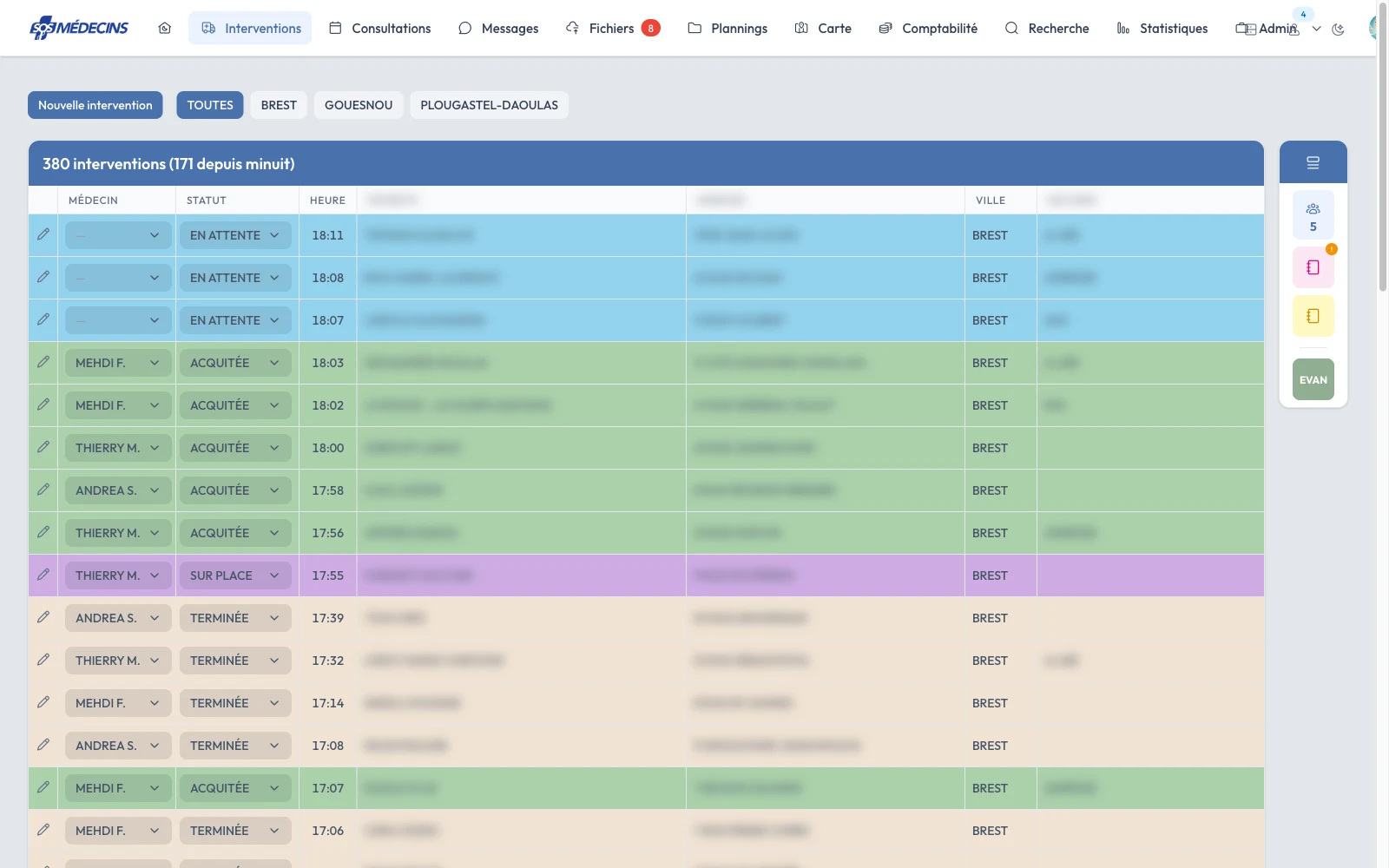
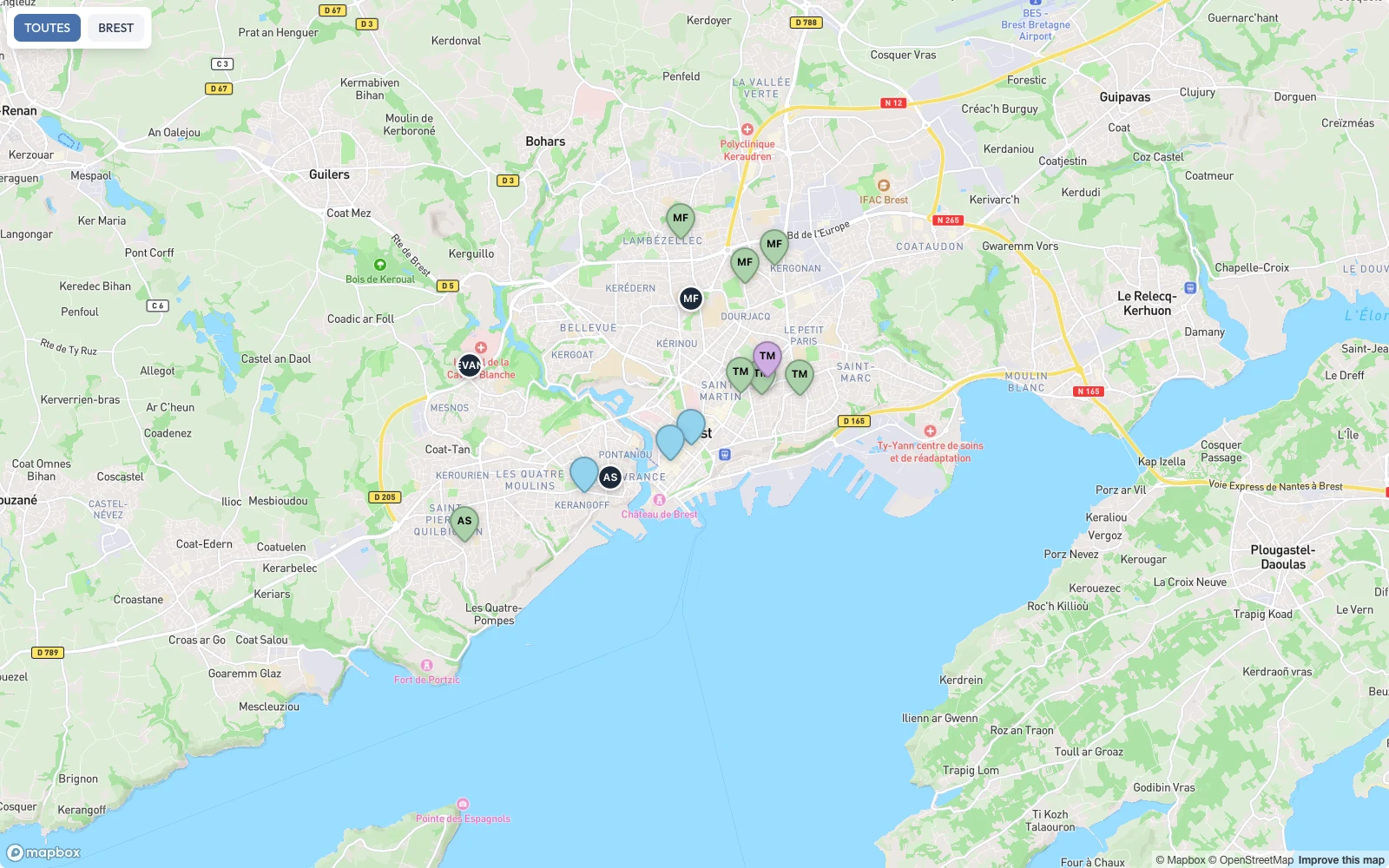
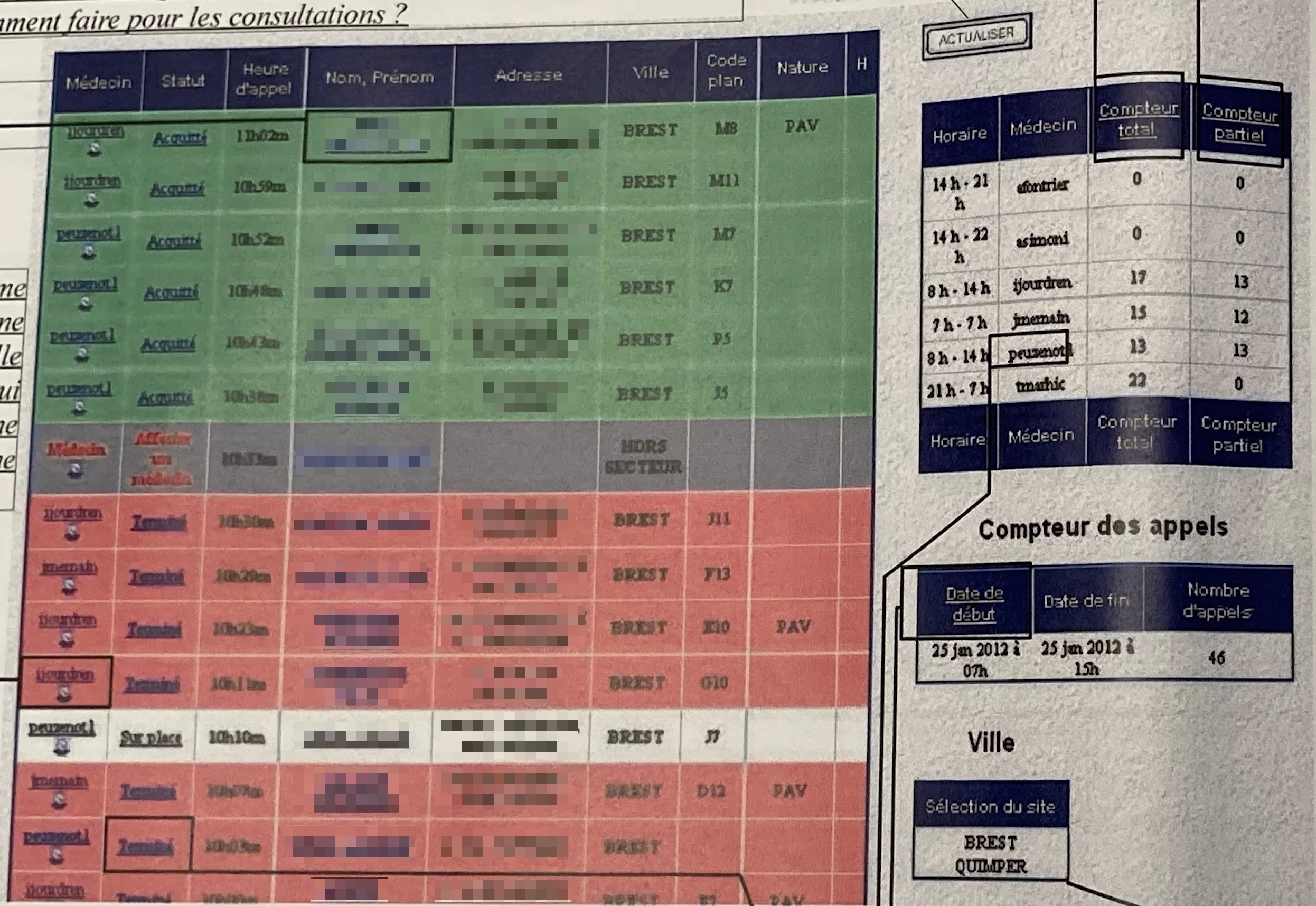
Its aging interface complicated handling and slowed down secretaries daily. Each action required multiple clicks or windows, without an overview of ongoing activity. The software offered no map to visualize doctor distribution in the city or real-time visit tracking.
Teams were therefore forced to operate with phone calls and additional dashboards to know which doctor was available. Payment and commission management relied on tedious manual calculations, sources of time loss and error risks. Finally, managers lacked statistical tools to manage activity, measure visit volumes, or anticipate needs.
Project objectives
The need was not to add another layer on top of the existing system. It needed one tool, adapted to the reality of an urgent care organization, capable of:
- Streamlining medical coordination through real-time mapping of doctors and interventions.
- Reducing administrative burden by automating billing, commission calculations, and file management.
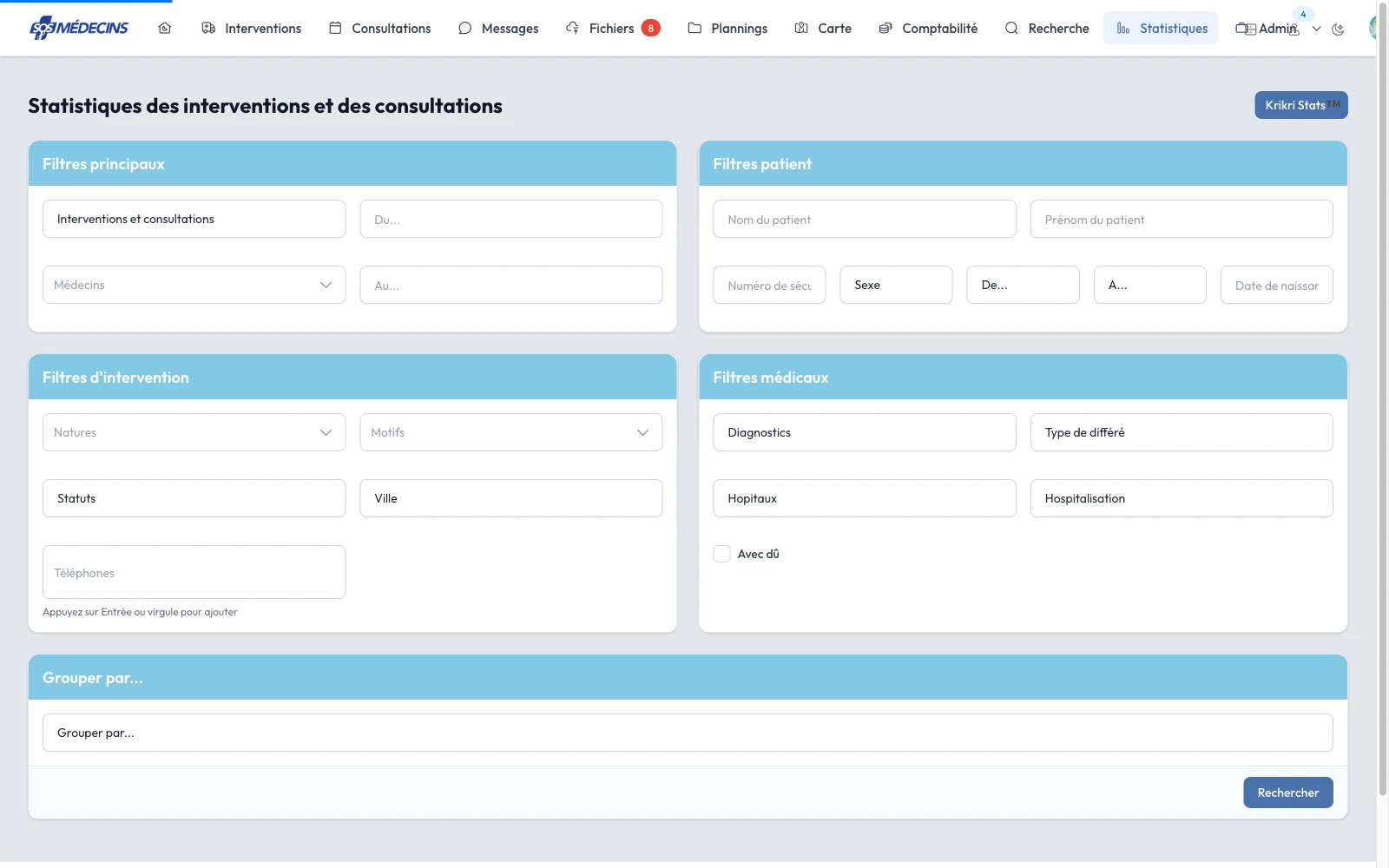
- Providing clear activity visibility through advanced search tools and multi-criteria statistics.
- Ensuring medical interoperability with the health ecosystem (SAMU, laboratories, Social Security).
- Anticipating regulatory changes (SÉGUR program, ANS services, Claude Bernard database) to ensure compliance and software sustainability.
The implemented solution
Since 2012, ORIGAMI has evolved with SOS Médecins. Every change starts from real use: remove duplicate entry, avoid an error, make a decision faster, or connect a new teleservice properly. The software can now handle up to 400 calls per day during peak periods with 6 doctors operating simultaneously in the field and 2 to 3 operators in offices.
Real-time medical coordination
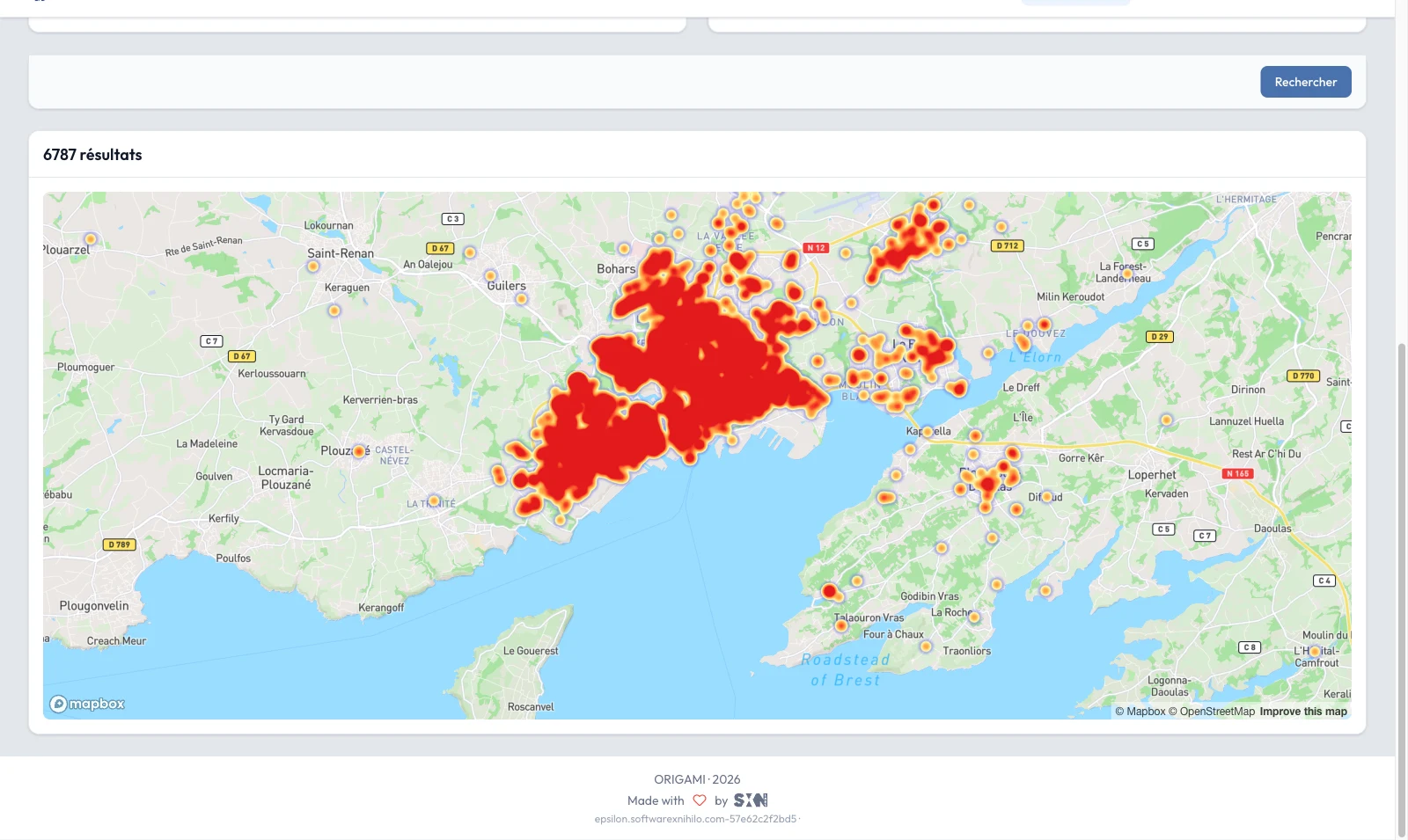
- Dynamic mapping of visits and doctors, with automatic geocoding and route optimization
- Real-time architecture ensuring instant synchronization between all workstations
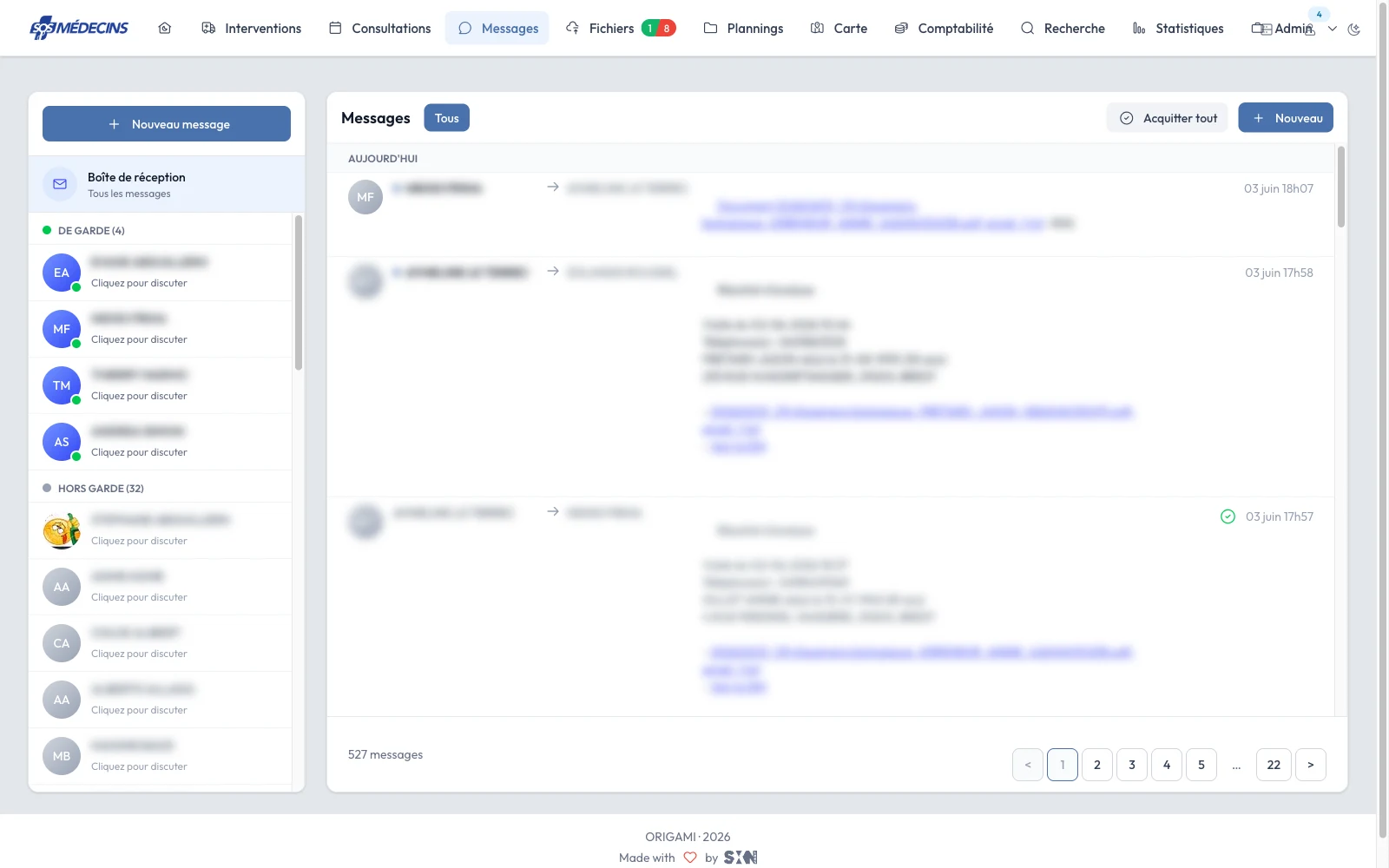
- Secure messaging internal and external (MSSanté) for communication with patients and between healthcare professionals
Administrative automation
- Automatic commission calculation, saving the equivalent of one month of work per year
- Automated generation of medical documents (sick leaves, certificates, prescriptions)
- Direct patient identification with Social Security teleservices
Interoperability and compliance
ORIGAMI interfaces with the health ecosystem to streamline the care pathway:
- SAS (Healthcare Access Service) integration from SAMU via HL7/FHIR API
- Automatic analysis retrieval from laboratories via SFTP/MSSanté
- HDS-certified hosting with encrypted and replicated database for health data security
- SÉGUR compliance : INSi teleservice for patient identification, progressive Claude Bernard database integration
Management and analysis
- Advanced search engine multi-criteria across the entire patient database
- Statistical dashboards to analyze activity (doctor, type of procedure, period, geographical area)
- Data export for mandatory declarations and epidemiological monitoring (Santé publique France)
Results achieved
What the solution delivers
+30%
patients handled from the 1st year
1 month
of work saved per year on administrative tasks
400
calls/day handled during peak periods
HDS
certified hosting, encrypted and replicated data
The implementation of ORIGAMI transformed the organization of SOS Médecins Brest. The migration, carried out via a data recovery script followed by a complete switchover, was performed without service interruption or double-run period.
Doctors benefit from better coordination thanks to the real-time map and integrated communication tools. Automatic medical document generation accelerates consultations while improving traceability.
Managers have precise indicators to manage activity: multi-criteria statistics, call volume tracking, workload analysis by doctor. This vision allows optimizing schedules and anticipating needs during high activity periods.
Testimonial
From October 2012 to July 2014, Nathan Le Ray changed the configuration of the ERP of an Emergency Medical Service. Every year, its dedicated call centre centralizes around 70000 phone calls leading to around 45000 medical home visits. These calls are made in urgent circumstances or in the absence of a treating doctor.
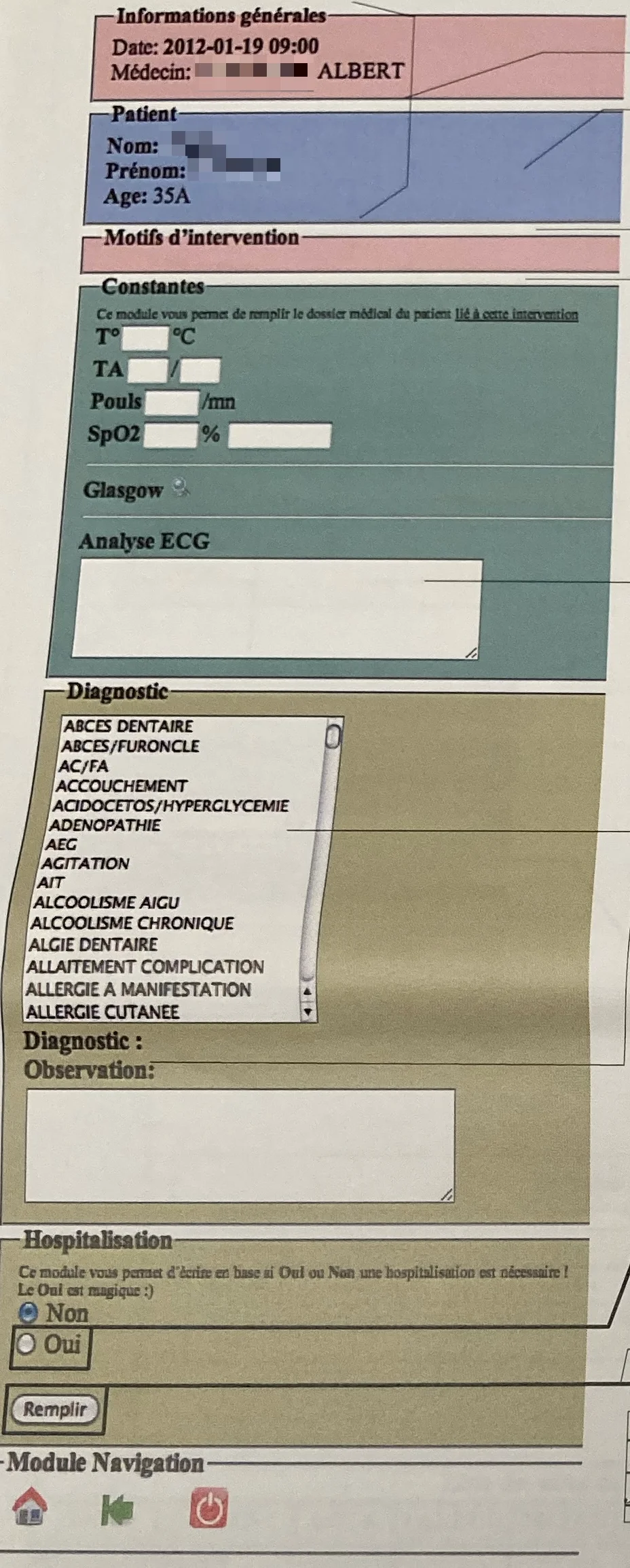
In a secure WebApp format, the ERP provides a classical feedback system of the patients’ files (available on site or on the doctors’ smartphones), a real-time geolocation of the ongoing or planned visits (either locally or accessible via smartphones), an internal mail server, a complete asset accounting module, a controlled access of the medical data transmission from the outside, a statistics module of the activities, a medical appointment schedule, which would allow a better management of future customer activities, as well as a simple and user-friendly admin interface.
While restructuring the tool since 2008, the result of some previous projects, Nathan Le Ray, who was 20 years old at that time, has been able to reconsider the whole project. He assessed the ergonomic needs of the different users (telephone operators, doctors, the administrator and the accountant). He took part in the drafting of the specifications. He explained the technical choices he could make. He included an outsourced backup solution. He anticipated the older database recovery. He adapted to the local network configuration. The contract also included the fact that he would put the project into production, which he did on July 21st 2014.
In short, beyond his efficient technical command, Nathan Le Ray proved to show a deep understanding of the customer needs as a whole.
Evolution and roadmap
ORIGAMI continues to evolve to support SOS Médecins' needs and remain compliant with national standards. Recent and ongoing work includes:
- Finalizing SÉGUR integration : complete deployment of Claude Bernard database for drug safety
- New facility integration : adding management of multiple sites by the same call center
The point is not to pile up modules. Every addition must preserve the software's reason to exist: help teams take the right call, send the right doctor, document the right record, and keep working even when the outside ecosystem gets more complicated.
Conclusion
ORIGAMI shows what custom business software brings when it is built with users and maintained over time: less friction in urgent work, less duplicate entry, more visibility, and the ability to absorb regulatory changes without starting over.
My role covers that whole chain: understand business constraints, design the right workflow, build, deploy, maintain, and evolve. It is rarely about technology alone. It is mostly about reliable software used every day by people who do not have time to fight their tools.